Probiotics and IBS — What the Research Actually Says

Probiotics are live microorganisms that, when given in adequate amounts, confer a health benefit on the host. They are among the most widely recommended interventions for IBS — sold in pharmacies, supermarkets and health food shops across Ireland at prices ranging from €10 to €60 a month. But the evidence is considerably more nuanced than the marketing suggests. This article reviews what the clinical literature actually shows, which specific strains have the strongest evidence, and whether food sources can do the same job as expensive supplements.
The Gut Microbiome and IBS
The gut microbiome — the community of trillions of microorganisms living in the gastrointestinal tract — is significantly altered in many people with IBS compared to healthy controls. Research consistently finds:
| Microbiome feature | Finding in IBS | Clinical significance |
|---|---|---|
| Overall diversity | Reduced compared to healthy controls | Lower diversity associated with worse symptom severity and reduced gut resilience |
| Firmicutes/Bacteroidetes ratio | Altered — pattern varies by IBS subtype | Influences motility and short-chain fatty acid production |
| Short-chain fatty acid production | Reduced butyrate in some studies | Butyrate is the primary fuel for colonocytes and supports gut barrier integrity |
| Akkermansia muciniphila | Often reduced in IBS | Keystone species for gut barrier integrity and mucus layer maintenance — see Akkermansia article |
| Bifidobacterium species | Consistently reduced in IBS | Important for immune regulation and competitive exclusion of pathogenic bacteria |
Whether these microbial changes are a cause or consequence of IBS is not yet fully established. The relationship is likely bidirectional — dysbiosis drives symptoms, and the altered gut environment of IBS further disrupts the microbiome. This provides a clear rationale for probiotic intervention, even if the optimal approach remains to be defined.
What Does the Overall Evidence Show?
The evidence base for probiotics in IBS is substantial but heterogeneous. A systematic review and meta-analysis published in the American Journal of Gastroenterology (Ford et al., 2018) — the largest and most comprehensive to date — analysed 53 randomised controlled trials covering thousands of IBS patients. Key findings:
| Outcome | Result vs placebo |
|---|---|
| Global IBS symptom improvement | Probiotics significantly superior to placebo |
| Abdominal pain | Significant reduction |
| Bloating | Significant reduction |
| Flatulence | Significant reduction |
| Single strain recommendation | No single strain could be confidently recommended over others |
Specific Strains with Clinical Evidence for IBS
Despite the heterogeneity of the overall literature, several individual strains have accumulated meaningful evidence from multiple well-designed trials:
| Strain | Key evidence | Best supported for |
|---|---|---|
| Lactobacillus plantarum 299v | Multiple RCTs; significant abdominal pain reduction, particularly IBS-D | Abdominal pain, flatulence, IBS-D |
| Bifidobacterium infantis 35624 | Well-designed RCT vs placebo; improvements in pain, bloating and bowel habit satisfaction | Pain, bloating, bowel habit normalisation |
| Lactobacillus acidophilus DDS-1 | RCT across 12 gastroenterology clinics; 52.3% responder rate vs placebo (P<0.001) | Abdominal pain severity; global IBS scores |
| Bifidobacterium longum NCC3001 | RCT in IBS with comorbid anxiety; reduced both gut and psychological symptoms | IBS with anxiety; quality of life |
| Multi-strain combinations (e.g. VSL#3) | Several RCTs; benefit for bloating and global symptoms, particularly IBS-D | Bloating, global symptoms, IBS-D |
Prebiotics and Synbiotics
Probiotics are often discussed alongside prebiotics — non-digestible fibres that selectively feed beneficial gut bacteria. The distinction matters for IBS because the two have different effects and different risk profiles:
| Type | What it is | IBS evidence | Caution |
|---|---|---|---|
| Probiotic | Live bacteria | Consistent positive evidence across multiple trials | Temporary initial bloating in some; caution with SIBO |
| Prebiotic (inulin / FOS) | Rapidly fermented fibre | Mixed — can worsen bloating in IBS due to rapid fermentation | High-FODMAP; may worsen gas and distension in sensitive individuals |
| Prebiotic (PHGG) | Partially hydrolysed guar gum; slower fermentation | Positive evidence for IBS-C and mixed IBS; better tolerated than inulin | Generally well tolerated |
| Prebiotic (GOS) | Galactooligosaccharides | Positive RCT evidence for IBS symptoms and microbiome diversity | Better tolerated than inulin at moderate doses |
| Synbiotic | Probiotic + prebiotic combined | Some evidence for enhanced efficacy versus probiotic alone | Choose products where prebiotic component is well-tolerated (not inulin-heavy) |
Food Sources vs Supplements
Probiotic-rich foods and probiotic supplements both have a role, but they are not interchangeable:
| Probiotic foods | Probiotic supplements | |
|---|---|---|
| Strain specificity | Variable and often uncontrolled | Specific strains at defined doses |
| CFU dose | Lower and variable | Standardised; stated on label |
| Nutritional value | High — protein, calcium, vitamins alongside bacteria | None beyond the probiotic itself |
| Microbiome diversity | Broader range of strains; varied bacterial exposure | Limited to stated strains |
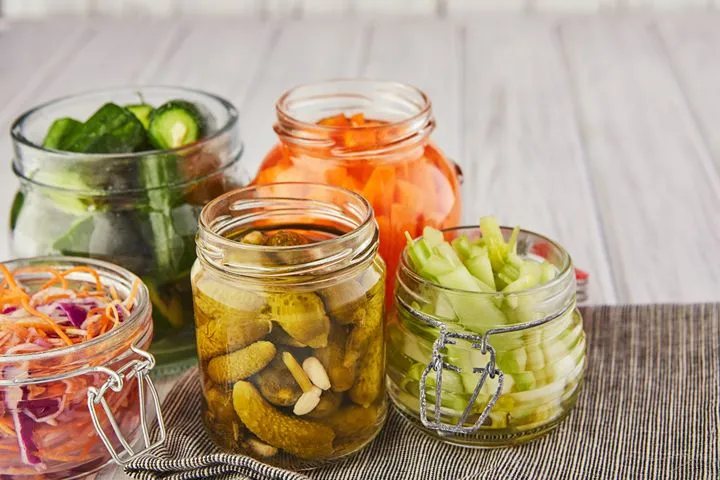
| Cost | Low — particularly homemade fermented foods | High — €15–€60/month for quality products |
| Best suited for | General gut microbiome support; daily maintenance | Targeted trial of clinically-studied strain for specific symptoms |
Homemade Greek yogurt — the cost-effective alternative
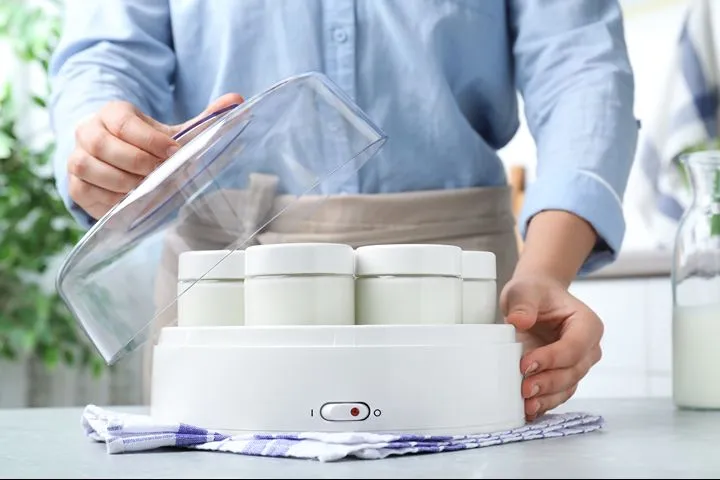
Of all probiotic food sources, homemade Greek yogurt deserves specific attention for IBS. Authentic Greek yogurt culture contains three strains with direct clinical relevance — Lactobacillus bulgaricus, Streptococcus thermophilus and Lactobacillus acidophilus — each with trial evidence for gut health. Making it at home using a freeze-dried live culture sachet costs approximately €1.75 per week in milk, delivers a consistently high live culture count, and avoids the stabilisers, added sugars and heat treatment that reduce live bacteria in most commercial products.

For many people with IBS, homemade Greek yogurt is a meaningful alternative to probiotic supplements costing €30–50 a month. For the full evidence on each strain and how to make it at home, see our guide to making Greek yogurt for gut health. For a broader fermented milk option with an even wider strain range, see kefir and IBS.
What to Look for on a Probiotic Supplement Label
Most probiotic supplements are not equal. The following checklist covers the key label elements that distinguish a quality product from one with little supporting evidence:
| Label element | What to look for | Red flag |
|---|---|---|
| Strain designation | Full name including strain code: e.g. Lactobacillus acidophilus DDS-1 | Only lists genus and species with no strain code (e.g. just "Lactobacillus acidophilus") |
| CFU count | Guaranteed at end of shelf life (not at time of manufacture) | "At time of manufacture" — bacteria die during storage; this figure is meaningless |
| Storage requirements | Refrigerated products generally maintain viability better; check if refrigeration is required | No storage guidance on label |
| Prebiotic carrier | PHGG or GOS as prebiotic, if included | Inulin, chicory root or FOS — high-FODMAP; may worsen IBS bloating |
| Clinical evidence | References to published trials for the specific strain on the label | Only generic health claims with no strain-specific research cited |
Frequently Asked Questions
On balance, the evidence says yes — but with important caveats. A meta-analysis of 53 randomised controlled trials found probiotics as a group were significantly better than placebo for global IBS symptoms, abdominal pain, bloating and flatulence. However, results vary considerably by strain, dose and IBS subtype, and no single strain has been universally recommended. Individual response is highly variable and a 4 to 8 week trial is needed to assess whether a given product is helping.
The strains with the strongest clinical evidence include Lactobacillus plantarum 299v (abdominal pain and IBS-D), Bifidobacterium infantis 35624 (pain, bloating and bowel habit), Lactobacillus acidophilus DDS-1 (abdominal pain severity) and Bifidobacterium longum NCC3001 (IBS with anxiety). Multi-strain combinations have also shown benefit. The critical point is that the specific strain designation must appear on the label — the species name alone is not sufficient.
Most clinical trials assess outcomes at 4 to 8 weeks of continuous use. If a probiotic is going to benefit you, some effect is typically apparent within this window. If no benefit is seen after 8 weeks at the recommended dose, it is reasonable to stop and consider a different strain or approach. A non-response to one strain does not predict non-response to all probiotics.
Most people tolerate probiotics well, but a temporary increase in bloating and gas is common in the first week or two as the gut microbiome adjusts. This usually settles. A smaller number of people — particularly those with suspected SIBO or significant abdominal distension — may find certain strains worsen symptoms more persistently. If symptoms worsen significantly and do not improve within 2 weeks, stop the probiotic and discuss with your GP.
They serve different purposes. Supplements allow delivery of specific, studied strains at standardised doses — which matters when targeting a particular symptom. Probiotic foods (kefir, live-culture yogurt, fermented vegetables) provide broader strain diversity and nutritional value at lower, more variable doses. For general microbiome maintenance, quality fermented foods are practical and cost-effective. For a targeted trial of a clinically-studied strain, a quality supplement is more appropriate.
Look for: the full strain designation including strain code (not just genus and species); CFU count guaranteed at end of shelf life rather than at manufacture; storage requirements; and whether the prebiotic carrier (if any) is inulin or FOS — both high-FODMAP and potentially problematic for IBS. Ideally, look for products where the specific strain has published clinical trial evidence for IBS.
Prebiotics are fibres that selectively feed beneficial gut bacteria. Their effect on IBS is mixed and depends heavily on the type. Inulin and FOS are high-FODMAP and can worsen bloating in IBS. Partially hydrolysed guar gum (PHGG) and galactooligosaccharides (GOS) have shown more consistent benefit with better tolerability. If you see "prebiotic complex" or "chicory root" on a supplement label, check whether it contains inulin before buying.
IBS.ie
Ireland's dedicated IBS information resource. We provide evidence-based, HSE and PubMed-referenced content on irritable bowel syndrome — covering symptoms, diet, gut health and management. All content is for general information only. Always consult your GP or a qualified specialist for personal medical advice.
Related Articles

Sources & References
Ford, A.C., et al. (2018). Efficacy of Prebiotics, Probiotics, and Synbiotics in Irritable Bowel Syndrome and Chronic Idiopathic Constipation. American Journal of Gastroenterology. View on PubMed ↗
Madempudi, R.S., et al. (2019). Randomized clinical trial: efficacy of Lactobacillus acidophilus DDS-1 in irritable bowel syndrome. Nutrients. View on PubMed ↗
Ishaque, S.M., et al. (2012). A randomised placebo-controlled clinical trial of a multi-strain probiotic formulation in irritable bowel syndrome. BMC Gastroenterology. View on PubMed ↗
Distrutti, E., et al. (2016). Gut microbiota role in irritable bowel syndrome: new therapeutic strategies. World Journal of Gastroenterology. View on PubMed ↗
HSE. Irritable Bowel Syndrome. View on HSE.ie ↗
