Fasting, Meal Timing and IBS — What the Emerging Research Shows
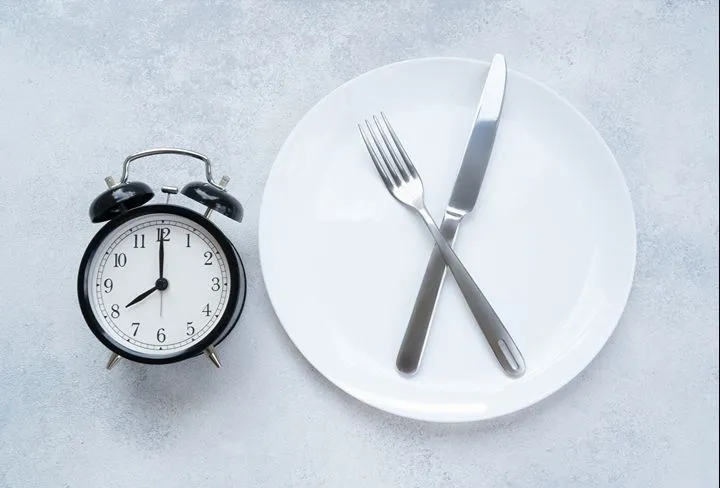
For people with IBS, when you eat may matter as much as what you eat. Intermittent fasting, time-restricted eating and meal frequency all have physiological effects on gut function that are directly relevant to IBS symptoms — particularly bloating, abdominal pain and urgency. The research is still emerging, but there is a coherent biological rationale connecting fasting windows to IBS, and early clinical data is cautiously encouraging. This article covers what the evidence shows, which IBS subtypes are most likely to benefit, and what practical changes are worth trying.
The Migrating Motor Complex — Why Fasting Matters for IBS
During periods between meals, the gut performs a crucial housekeeping function known as the Migrating Motor Complex (MMC). The MMC is a recurring cycle of muscular contractions that sweeps through the small intestine approximately every 90 minutes during fasting, clearing undigested food, bacteria and debris and propelling them toward the colon. It is sometimes described as the gut's housekeeper — and it can only function during genuine fasting periods.
The mechanism is clinically important because it directly relates to one of the most common and distressing IBS symptoms: bloating. Excess gas in IBS is primarily produced by bacteria fermenting undigested carbohydrates in the small intestine. The MMC is what prevents bacterial populations from building up in the small intestine in the first place. When MMC function is chronically impaired — as occurs with frequent eating throughout the day — bacteria accumulate, fermentation increases, and bloating worsens.
Eating — any eating, including small snacks — interrupts the MMC and resets the 90-minute cycle from zero. If eating occurs frequently throughout the day, the MMC never completes its full sweep. This is the physiological basis for why the traditional dietary advice to eat "little and often" for IBS is increasingly questioned: it may reduce the gastrocolic reflex per meal, but at the cost of chronically suppressing the MMC.
Meal Frequency — The Case Against Grazing
The "little and often" approach to IBS — eating small amounts frequently to avoid large meal-related symptoms — has been standard dietary advice for decades. It has a rationale: smaller meals produce a smaller gastrocolic reflex, reducing urgency and cramping after eating, particularly in IBS-D. For that specific symptom, smaller and more frequent meals can help.
But for bloating, distension and suspected bacterial overgrowth, frequent eating is counterproductive. The evidence increasingly supports a structured three-meal pattern with clear fasting intervals between meals:
| Eating pattern | MMC effect | Best suited for | Risk for |
|---|---|---|---|
| 3 meals, no snacking, 4–5 hr gaps | Allows MMC to complete cycles | Bloating, IBS-D, mixed IBS | May worsen IBS-C if gaps too long |
| Frequent small meals / grazing | Chronically suppresses MMC | IBS-D urgency after large meals | Worsens bloating, bacterial fermentation |
| 16:8 time-restricted eating | Extended overnight MMC window | Bloating, suspected SIBO, metabolic health | IBS-C, anxiety, disordered eating history |
| Skipping meals / irregular timing | Disrupts circadian gut rhythm | No clear benefit | Stress response, hypoglycaemia, symptom flares |
The practical approach supported by clinical experience is three structured meals per day with a minimum of 3 to 4 hours between them, avoiding snacking between meals where tolerated. This allows MMC cycles to complete while avoiding meal-skipping patterns that provoke stress responses — both a direct and an indirect IBS trigger via the gut-brain axis.

Intermittent Fasting and IBS — What the Evidence Shows
Formal IBS-specific intermittent fasting research is limited but growing. The most relevant study to date examined time-restricted eating (TRE) with a 16:8 pattern in IBS patients.
The 16:8 pilot study (Nutrients, 2021)
A pilot study published in Nutrients in 2021 examined a 16:8 time-restricted eating pattern (16 hours fasting, 8-hour eating window) in IBS patients over 8 weeks. Key findings:
| Outcome measure | Result |
|---|---|
| IBS symptom severity score | Significant reduction from baseline |
| Abdominal pain | Significant reduction |
| Bloating | Significant reduction |
| Gut microbiome diversity | Increased (generally favourable) |
| Pro-inflammatory bacteria | Reduced populations |
The study was small and uncontrolled — there was no placebo group, so the contribution of dietary attention and behaviour change cannot be separated from the fasting effect itself. The findings should not be overstated. However, they are consistent with the MMC and circadian rhythm mechanisms described above, which gives them biological plausibility beyond simple correlation.
Circadian Rhythm and Meal Timing
Independent of fasting duration, the timing of meals relative to the body's internal clock has measurable effects on gut function. Circadian rhythm research has established that digestive enzyme secretion, gut motility and intestinal permeability all follow a 24-hour biological rhythm — they are not constant throughout the day.
The practical implications for IBS:
- Front-load calories earlier in the day. Digestive capacity is greatest in the morning and early afternoon. Eating the largest meal at breakfast or lunch rather than in the evening aligns food intake with peak digestive function.
- Avoid eating late at night. Multiple studies have found that late-night eating is associated with worse IBS symptom scores independent of food content. The gut's motility slows in the evening, and the MMC's overnight cleaning cycle is extended when the final meal is earlier.
- Eat at consistent times every day. The gut's circadian clock is entrained partly by meal timing. Irregular eating — different meal times each day — disrupts gut rhythm and is associated with increased symptom variability in IBS.

IBS Subtype Considerations
The effect of fasting and meal timing on IBS symptoms varies significantly by subtype. There is no single approach that works for everyone:
| IBS Subtype | Likely to benefit from longer fasting gaps? | Notes |
|---|---|---|
| IBS-D (diarrhoea-predominant) | Moderately — for bloating and gas | Smaller meal sizes may help urgency; 3-meal pattern generally suitable |
| IBS-C (constipation-predominant) | Cautiously — not extended fasting | Gastrocolic reflex from meals stimulates bowel; very long gaps may worsen constipation |
| IBS-M (mixed) | Yes — with monitoring | Consistent 3-meal pattern with attention to constipation days |
| IBS-U (unclassified) / bloating-predominant | Yes — strong rationale | MMC support likely most beneficial here; TRE reasonable to trial |
Who Should Not Fast With IBS
Fasting strategies are not appropriate for everyone. The following groups should approach intermittent fasting with particular caution or avoid it entirely:
- IBS with significant anxiety or eating disorder history — restrictive eating patterns increase psychological stress, which worsens IBS via the gut-brain axis and may pose a risk to disordered eating recovery
- IBS-C — extended fasting windows may reduce bowel movement frequency; structured 3-meal pattern is preferable to extended TRE protocols
- Pregnancy — fasting is not appropriate during pregnancy
- Underweight or nutritionally depleted — restricting eating windows is not suitable if caloric intake is already inadequate
- People on medications that require food — some medications, including certain IBS medications, must be taken with food; a GP or pharmacist should be consulted
Practical Meal Timing Guide for IBS
Based on the MMC evidence, circadian rhythm research and clinical experience, the following approach is a reasonable starting point for most adults with IBS:
| Principle | Practical application |
|---|---|
| 3 meals per day | Breakfast, lunch, dinner — no snacking between meals where tolerated |
| Minimum 3–4 hours between meals | Allows one full MMC cycle to complete between meals |
| Consistent timing | Aim for the same meal times each day to entrain the gut's circadian clock |
| Largest meal earlier | Breakfast or lunch as the main meal; lighter dinner |
| Final meal 2–3 hours before bed | Allows the MMC overnight window to function; reduces late-night symptom risk |
| If trialling 16:8 | Place eating window earlier in the day (e.g. 8am–4pm or 9am–5pm) rather than late (12pm–8pm) |
These principles complement other IBS dietary approaches rather than replacing them. If you are following the low-FODMAP diet, meal timing optimisation can be layered on top — addressing when to eat the foods you have already identified as safe.
Frequently Asked Questions
It depends on your IBS subtype. For bloating-predominant IBS or suspected SIBO, longer fasting windows can reduce symptoms by supporting MMC function. For IBS-C, extended fasting may worsen constipation. For those with significant anxiety, restrictive eating patterns can increase psychological stress and worsen symptoms. A gradual trial with symptom monitoring is the sensible approach — and anyone with a complex history should discuss it with their GP first.
The migrating motor complex (MMC) is a cycle of muscular contractions that sweeps through the small intestine roughly every 90 minutes during fasting. It acts as the gut's cleaning mechanism — clearing bacteria, debris and undigested matter toward the colon. Eating resets the MMC cycle. Frequent eating or grazing prevents it completing, which allows bacteria to accumulate in the small intestine and produce excess gas. Supporting MMC function through adequate fasting gaps is one of the physiological rationales for structured meal timing in IBS.
Circadian rhythm research suggests eating earlier in the day works best with gut function. The largest meal at breakfast or lunch rather than dinner aligns with peak digestive capacity. Avoiding food for 2 to 3 hours before bed allows the MMC to function overnight. Eating at consistent times each day, rather than variable times, also supports the gut's internal clock and may reduce symptom variability.
Early evidence is cautiously positive. A pilot study found that 8 weeks of 16:8 time-restricted eating reduced IBS symptom severity, bloating and abdominal pain, with favourable changes in gut microbiome diversity. The study was small and uncontrolled, so findings should not be overstated. For suitable candidates without IBS-C, eating disorders or high anxiety, a trial is a reasonable approach — ideally with the eating window placed earlier in the day.
The traditional advice to eat little and often is not universally supported. Smaller meals can reduce urgency after eating for IBS-D, which is genuinely useful. But frequent eating prevents the MMC from completing its cycles, which may worsen bloating and bacterial fermentation. For most people with IBS, three structured meals per day with 3 to 4 hours between them — and no snacking — is a better framework than grazing throughout the day.
Fasting periods may help with IBS bloating by allowing the MMC to complete its small intestinal cleaning cycles. Bloating in IBS is often driven by bacterial fermentation producing gas in the small intestine — a process that increases when the MMC is chronically suppressed by frequent eating. Allowing 4 to 5 hours between meals without snacking, plus a longer overnight fast, gives the MMC time to function. It is not a cure, but it addresses one of the physiological drivers of IBS bloating.
Yes. Research on circadian rhythms shows that the timing of meals relative to the body's internal clock affects digestive enzyme secretion, gut motility and intestinal permeability. Late-night eating is associated with worse IBS symptom scores independent of food content. Eating at consistent times each day, front-loading calories earlier, and avoiding food in the 2 to 3 hours before sleep are all timing strategies with a clear physiological rationale.
IBS.ie
Ireland's dedicated IBS information resource. We provide evidence-based, HSE and PubMed-referenced content on irritable bowel syndrome — covering symptoms, diet, gut health and management. All content is for general information only. Always consult your GP or a qualified specialist for personal medical advice.
Related Articles

Sources & References
Adawi, M., et al. (2019). Ramadan fasting exerts immunomodulatory effects: insights from a systematic review. Frontiers in Immunology. View on PubMed ↗
Lomer, M.C.E. (2015). Review article: the aetiology, diagnosis, mechanisms and clinical evidence for food intolerance. Alimentary Pharmacology & Therapeutics. View on PubMed ↗
Thaiss, C.A., et al. (2016). Microbiota-accessible carbohydrates broaden the range of microbiomes responding to intervention. Cell. View on PMC ↗
Öhman, L., & Simrén, M. (2010). Pathogenesis of IBS: role of inflammation, immunity and neuroimmune interactions. Nature Reviews Gastroenterology and Hepatology. View on PubMed ↗
HSE. Irritable Bowel Syndrome — Lifestyle and diet. View on HSE.ie ↗
