The Low-FODMAP Diet and IBS — An Irish Guide
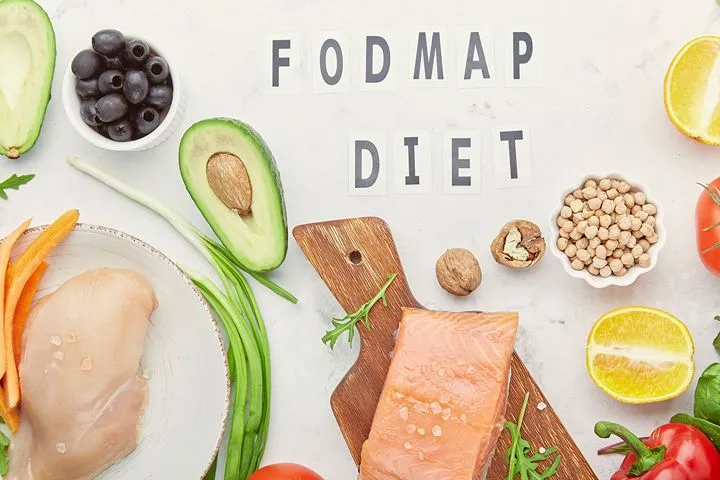
The Low-FODMAP diet is the most extensively researched dietary approach for IBS, with randomised controlled trials consistently showing significant symptom reduction in 50–75% of patients. Developed at Monash University in Melbourne, it is now recommended by leading gastroenterological bodies worldwide — including in Irish clinical practice. This guide explains what FODMAPs are, how the diet works, and how to follow it practically in an Irish context.
The Low-FODMAP diet should not be used as a self-diagnosis tool. If you have not been assessed by a GP for your gut symptoms, that is the right starting point — regardless of age. IBS shares symptoms with coeliac disease, IBD and other conditions that need to be ruled out first. Once you have a confirmed diagnosis, the Low-FODMAP diet is one of the most effective tools available.
What Are FODMAPs?
FODMAP is an acronym for Fermentable Oligosaccharides, Disaccharides, Monosaccharides And Polyols. These are short-chain carbohydrates and sugar alcohols that share three key properties relevant to IBS: they are poorly absorbed in the small intestine, they are rapidly fermented by colonic bacteria (producing gas), and they draw water into the bowel through osmosis.
In people without IBS, this process occurs normally with minimal symptoms. In IBS, the resulting gas production, bowel distension and accelerated transit amplify the already-heightened visceral sensitivity — producing bloating, pain, urgency and altered bowel habits. A landmark trial published in Gastroenterology (2014) compared a Low-FODMAP diet to a standard dietary approach in IBS patients and found that 68% of the Low-FODMAP group had adequate symptom relief versus 23% of controls.
The five FODMAP categories each cause symptoms through slightly different mechanisms:
| FODMAP Type | What It Is | Common Irish Sources |
|---|---|---|
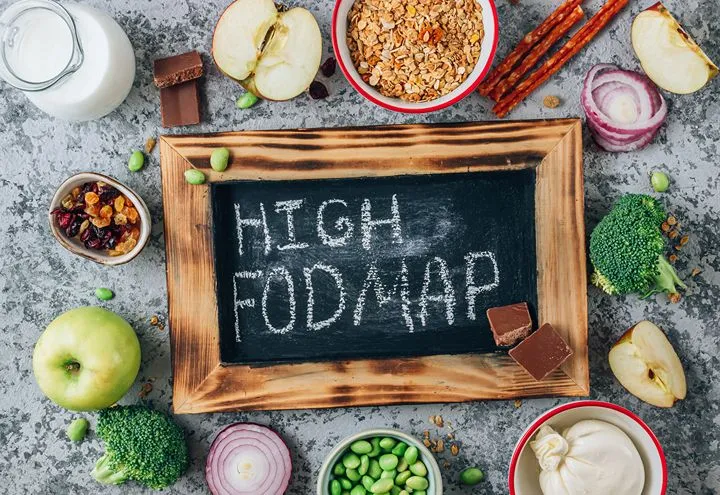
| Oligosaccharides (Fructans) | Chains of fructose molecules | Wheat, rye, onion, garlic, leeks |
| Oligosaccharides (GOS) | Galacto-oligosaccharides | Legumes, kidney beans, chickpeas, lentils |
| Disaccharides (Lactose) | Milk sugar | Milk, yogurt, soft cheese, ice cream |
| Monosaccharides (Fructose) | Fruit sugar in excess of glucose | Apples, pears, mango, honey |
| Polyols | Sugar alcohols | Stone fruits, avocado, sugar-free chewing gum |
High-FODMAP Foods to Limit
The most significant high-FODMAP foods in the typical Irish diet are worth knowing before you start, as several are staples that require practical workarounds rather than simple elimination:
- Wheat — bread, pasta, most baked goods and cereals contain fructans. Standard sliced pan, rolls and pasta are high-FODMAP. Gluten-free alternatives made from rice flour or potato starch are low-FODMAP.
- Onion and garlic — among the highest-FODMAP foods tested, and present in the base of almost all Irish cooking, sauces, stocks and spice mixes. These require specific workarounds (see below).
- Lactose-containing dairy — milk, yogurt, soft cheeses (including cottage cheese and ricotta), cream and ice cream. Hard cheeses like cheddar, gouda and parmesan are low-FODMAP because the lactose is removed during ageing.
- Legumes — kidney beans, chickpeas, lentils, baked beans and most canned beans are high in GOS. Small portions of canned and well-rinsed lentils (around 46g) may be tolerated.
- Stone fruits — peaches, nectarines, plums, cherries and apricots are high in polyols. Tinned versions in juice (not syrup) may be lower.
- Apples and pears — high in fructose and polyols. Among the most commonly identified IBS triggers in Irish diets.
- Polyols in sugar-free products — sorbitol, mannitol, xylitol and maltitol are used as sweeteners in sugar-free chewing gum, mints, protein bars and some medications. Check labels carefully.
Low-FODMAP Foods You Can Eat
A common concern before starting the Low-FODMAP diet is that the food list will be severely restricted. In practice, the majority of whole foods are low-FODMAP and a varied, nutritious diet is entirely achievable:
| Category | Low-FODMAP Options | Notes |
|---|---|---|
| Grains & Carbs | Rice, oats, quinoa, potatoes, gluten-free pasta, rice cakes, corn tortillas | Oats should be certified gluten-free to avoid cross-contamination |
| Vegetables | Carrots, courgette, spinach, tomatoes, peppers, cucumber, aubergine, green beans, parsnip, kale | Portion size matters — some veg become high-FODMAP in large quantities |
| Protein | All meat, fish, eggs, firm tofu, tempeh | Avoid marinated meats with garlic or onion-based sauces |
| Dairy alternatives | Lactose-free milk, hard cheese (cheddar, parmesan, gouda), butter, brie, camembert | Lactose-free versions of milk and yogurt are widely available in Irish supermarkets |
| Fruit | Blueberries, strawberries, raspberries, kiwi, oranges, grapes, banana (firm/unripe) | Ripe bananas are higher in fructose — less ripe is better |
| Nuts & Seeds | Walnuts, pecans, macadamia, pumpkin seeds, sunflower seeds | Almonds are low-FODMAP at 10 per serving; cashews and pistachios are high-FODMAP |
| Condiments | Soy sauce (small amounts), maple syrup, rice wine vinegar, mustard, garlic-infused oil | Garlic-infused oil is low-FODMAP — the fructans do not transfer into oil |
The Garlic and Onion Problem — and How to Work Around It
Garlic and onion are the two foods most likely to cause problems on the Low-FODMAP diet in Ireland, because they form the flavour base of almost every Irish dish, sauce, stock and spice blend. Simply eliminating them from your cooking feels unworkable — but there are effective practical solutions.
- Garlic-infused oil — the fructans in garlic are water-soluble but not fat-soluble, which means they do not transfer into oil. Frying garlic cloves in oil and then removing them before cooking leaves the garlic flavour without the FODMAPs. Commercially produced garlic-infused olive oil is also low-FODMAP and available in most Irish supermarkets.
- Spring onion (green tops only) — the green tops of spring onions are low-FODMAP; the white bulb is high-FODMAP. Using only the green tops provides onion flavour without the fructan load.
- Chives — low-FODMAP and a useful onion substitute in cooking and garnishing.
- Asafoetida (hing) — an Indian spice with a strong onion/garlic flavour, available in Asian food shops in Ireland and online. Used in small amounts, it provides a remarkably similar flavour profile and is low-FODMAP.
- Check all stock cubes and spice mixes — onion powder and garlic powder are high-FODMAP and present in most stock cubes, gravy granules and spice blends sold in Irish supermarkets. Kallo and some Marigold products offer low-FODMAP options.
Replace your regular cooking oil with garlic-infused olive oil and use the green tops of spring onions in place of onion. These two changes alone remove the two highest-FODMAP ingredients from the majority of Irish home cooking while preserving the flavour base of most dishes.
How to Follow the Low-FODMAP Diet — The Three Phases
The Low-FODMAP diet is a structured three-phase protocol, not a permanent elimination diet. This distinction is important — the goal is to identify your personal triggers, not to avoid all FODMAPs indefinitely.

| Phase | Duration | What You Do | Goal |
|---|---|---|---|
| Phase 1 — Elimination | 2–6 weeks | Strictly avoid all high-FODMAP foods | Establish a symptom baseline and confirm the diet is working |
| Phase 2 — Reintroduction | 6–8 weeks | Reintroduce one FODMAP group at a time, in controlled amounts, every 3 days | Identify which FODMAP types trigger your symptoms and at what portion size |
| Phase 3 — Personalisation | Long-term | Return to a varied diet, avoiding only your confirmed personal triggers | A sustainable, nutritionally complete diet tailored to your individual tolerance |
Phase 1 — Elimination (2–6 Weeks)
The elimination phase involves strictly avoiding all high-FODMAP foods for two to six weeks. Two weeks is sufficient for most people to see a clear symptom response. Six weeks is used when symptoms are complex or improvement is slow. The purpose is to establish a clear low-symptom baseline — not to achieve zero symptoms indefinitely on this phase alone.
If symptoms do not improve significantly after six weeks of strict elimination, the Low-FODMAP diet may not be your primary trigger — and a return to your GP or gastroenterologist is appropriate to reassess.
Phase 2 — Reintroduction (6–8 Weeks)
Reintroduction is the most important phase and the one most people skip — often to their long-term detriment. The purpose is to systematically test each FODMAP group individually to determine which ones trigger your symptoms and at what portion size. Without this phase, you cannot identify your actual triggers and risk avoiding foods you may tolerate perfectly well.
The process: choose one FODMAP group to test. Eat a standard portion of a test food containing primarily that FODMAP on day one, a larger portion on day two, and monitor for symptoms for the following two days before testing the next group. Keep a symptom diary throughout. Common reintroduction order: lactose (milk), fructans (wheat), fructans (garlic), fructans (onion), GOS (legumes), fructose (honey/mango), polyols (sorbitol), polyols (mannitol).
Many people feel so much better on the elimination phase that they stay on it indefinitely. This is a mistake. Long-term avoidance of all high-FODMAP foods — including legumes, onions and wheat — reduces dietary fibre and prebiotic intake, which can negatively affect gut microbiome diversity over time. The reintroduction phase exists to free you from unnecessary restriction, not to add to it.
Phase 3 — Personalisation (Long-Term)
After reintroduction, you will have a clear picture of which FODMAP groups trigger your symptoms and roughly at what quantities. Phase 3 is a return to a varied, nutritionally complete diet — avoiding only your confirmed personal triggers, and only at the portion sizes that cause problems. Most people find they can tolerate many previously eliminated foods in smaller quantities, and that their actual trigger list is shorter than they expected going in.
The Low-FODMAP Diet in Ireland — Practical Shopping Guide
One of the most common practical challenges in Ireland is identifying suitable products in standard supermarkets. The good news is that the main Irish supermarkets — Tesco, Dunnes Stores, SuperValu, Lidl and Aldi — all stock the key staples needed for the elimination phase without requiring specialist shops.

| What You Need | Where to Find It in Ireland | Notes |
|---|---|---|
| Gluten-free pasta and bread | All major supermarkets — free-from aisle | Schär and Barkat are widely stocked; rice-based is preferable to corn-based for texture |
| Lactose-free milk | Avonmore Lactose Free is stocked in most Irish supermarkets | Tastes identical to regular milk — the lactose is broken down, not removed |
| Garlic-infused oil | Tesco, SuperValu, health food shops | Alternatively make your own by frying garlic cloves in olive oil and discarding the cloves |
| Oat milk (low-FODMAP) | All major supermarkets | Oat milk is low-FODMAP at 30ml; larger quantities may be an issue for some |
| Rice cakes | All major supermarkets | A useful bread substitute during elimination — plain versions only |
| Canned fish (tuna, salmon, sardines) | All major supermarkets | In spring water or brine — avoid flavoured varieties with garlic or onion |
| Low-FODMAP stock | Health food shops; online (Eatopia, iHerb) | Kallo low-salt vegetable stock or Marigold Swiss Bouillon (check label) are options |
| Monash FODMAP app | iOS and Android | The gold standard reference — use it to check any food before buying |
Is the Low-FODMAP Diet the Same as a Gluten-Free Diet?
No — and this is one of the most common misconceptions. The Low-FODMAP diet restricts wheat because wheat contains fructans, not because it contains gluten. Gluten is the protein in wheat; fructans are the carbohydrate. People who improve on a Low-FODMAP diet are responding to the fructan reduction, not the gluten removal.
This matters clinically. A 2018 double-blind trial published in Gastroenterology demonstrated that people who believed they were sensitive to gluten actually reacted to the fructan content of wheat, not the gluten. This explains why many people who report "feeling better on gluten-free" are actually responding to incidental fructan reduction — not coeliac disease and not non-coeliac gluten sensitivity.
In practical terms: gluten-free products are often suitable on the Low-FODMAP diet (because they are made from rice or potato flour rather than wheat), but not all gluten-free products are low-FODMAP. Gluten-free products made with chicory root, inulin, apple or pear juice, or high quantities of legume flour can still be high-FODMAP.
Is the Keto Diet Low-FODMAP?
There is significant overlap between a ketogenic diet and the Low-FODMAP diet — enough that many people following keto report improvement in IBS symptoms without intentionally following Low-FODMAP principles. Both diets eliminate wheat, most grains, high-sugar fruits and legumes. Both emphasise protein, fat and lower-carbohydrate vegetables.
However, they are not the same thing, and keto is not a substitute for Low-FODMAP in IBS management. Key differences: keto restricts carbohydrates for metabolic reasons and does not distinguish between high and low-FODMAP foods within that restriction. Some keto staples — avocado in large quantities, cashews, certain high-fat dairy, cauliflower (moderate FODMAP at large servings) — can be high-FODMAP. Conversely, some low-FODMAP foods (rice, potatoes, most fruit) are not compatible with keto.
The symptom improvement some IBS patients experience on keto is likely attributable to the incidental reduction in fructans and GOS that comes with eliminating grains and legumes — not to the carbohydrate restriction itself. If you are already following a ketogenic diet and experiencing IBS symptom improvement, you may find that Low-FODMAP reintroduction testing helps you identify your specific triggers within that framework.
Working With a Dietitian in Ireland
The Low-FODMAP diet is one of the more complex dietary interventions available — the elimination phase requires careful label-reading, the reintroduction phase requires systematic testing, and the personalisation phase requires interpreting your own symptom data. Doing it without guidance frequently leads to either inadequate restriction in phase one (producing unclear results) or over-restriction in phase three (unnecessary long-term dietary limitation).
A registered dietitian trained in the Low-FODMAP protocol will guide you through all three phases, ensure nutritional adequacy during elimination, help you interpret reintroduction results, and support you in building a sustainable long-term diet. In Ireland, dietitian referrals are available through your GP (public, via HSE) or privately. The Irish Nutrition and Dietetic Institute (INDI) maintains a register of dietitians at indi.ie.
The Monash University FODMAP Diet app is the gold standard reference for FODMAP content and is used by dietitians and patients worldwide, including in Ireland. It is updated regularly as new foods are tested and allows you to check any food before buying or eating it. Available for iOS and Android. It is an invaluable tool during the elimination and reintroduction phases — particularly for checking Irish supermarket products and eating out.
Frequently Asked Questions
Traditional long-fermented sourdough bread made from wheat flour is considered low-FODMAP in small servings (1–2 slices), because the prolonged fermentation process breaks down much of the fructan content. However, commercially produced "sourdough" breads that are made quickly may not have the same fructan reduction. Spelt sourdough is not low-FODMAP. Monash University has tested specific sourdough breads and results vary by product — check the app for tested brands.
Yes — oats are low-FODMAP at a standard serving (52g dry / half a cup). However, oats are often processed in facilities that also handle wheat, so cross-contamination with fructans is possible. If you have coeliac disease or are very sensitive to fructans, certified gluten-free oats are the safer option. Flavoured instant oat sachets often contain high-FODMAP additives — plain oats are preferable.
Eating out on the elimination phase is genuinely challenging because garlic and onion are in the base of most restaurant dishes, sauces and marinades. Grilled proteins (meat or fish without sauce), plain rice, chips (without seasoning) and salads with olive oil and lemon are generally safe options. Asian restaurants — particularly Japanese and Thai — often have naturally low-FODMAP options such as sushi or plain rice dishes. It is worth calling ahead and explaining your requirements during the elimination phase.
Most people who respond to the Low-FODMAP diet notice meaningful symptom improvement within 2–4 weeks of starting the elimination phase. Some notice improvement within days; others take the full six weeks. If there is no improvement after six weeks of strict adherence, the diet is unlikely to be the primary treatment for your IBS and you should return to your GP to reassess.
The elimination phase is not intended to be permanent and should not be followed long-term without reintroduction. Strict long-term avoidance of all high-FODMAP foods can reduce dietary fibre and prebiotic intake, which affects gut microbiome diversity. The personalisation phase — following reintroduction — results in a diet that avoids only your confirmed triggers, which is nutritionally sustainable long-term. Working with a dietitian helps ensure the long-term diet remains nutritionally complete.
Yes — the Monash University FODMAP Diet app is the gold standard reference for FODMAP content of specific foods and is used by dietitians and patients worldwide, including in Ireland. It is available for iOS and Android and is updated regularly as new foods are tested. It is an invaluable tool during the elimination and reintroduction phases, and includes a restaurant card feature that explains your dietary requirements in multiple languages.
IBS.ie
Ireland's dedicated IBS information resource. We provide evidence-based, HSE and PubMed-referenced content on irritable bowel syndrome — covering symptoms, diet, gut health and management. All content is for general information only. Always consult your GP or a qualified specialist for personal medical advice.
Related Articles

Sources & References
Halmos, E.P., et al. (2014). A Diet Low in FODMAPs Reduces Symptoms of Irritable Bowel Syndrome. Gastroenterology. View on PubMed ↗
Gibson, P.R. & Shepherd, S.J. (2010). Evidence-based dietary management of functional gastrointestinal symptoms: The FODMAP approach. Journal of Gastroenterology and Hepatology. View on PubMed ↗
