Homemade Greek Yogurt for Gut Health — The Evidence and How to Make It
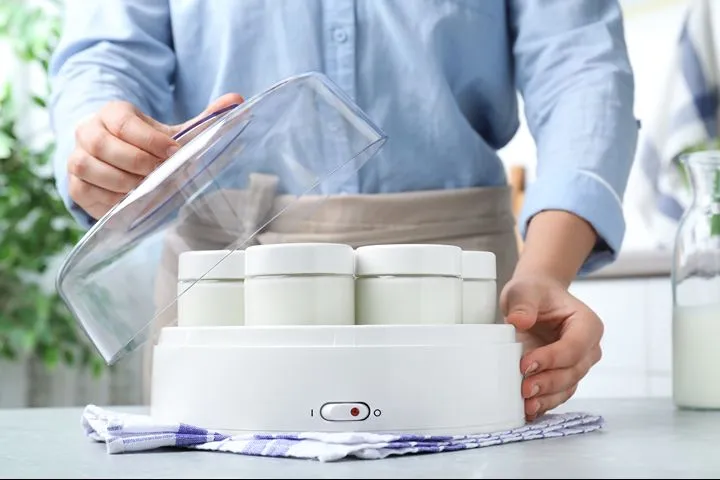
Authentic Greek yogurt is made with three specific bacterial strains — Lactobacillus bulgaricus, Streptococcus thermophilus and Lactobacillus acidophilus. Each has been individually studied in IBS clinical trials. The problem is that most commercial Greek yogurts cannot guarantee these strains are still alive and at therapeutic levels by the time the product reaches you — pasteurisation after fermentation, extended shelf life and stabilisers all take their toll. Making Greek yogurt at home using a live freeze-dried culture costs approximately €1.75 a week in milk, takes minutes of active time, and delivers a probiotic-rich product no supermarket shelf can match.
The Three Strains — What the Research Shows
The clinical case for homemade Greek yogurt rests on three strains, each with its own evidence base in IBS.
| Strain | Primary mechanism | Key clinical finding |
|---|---|---|
| Lactobacillus acidophilus | Gut barrier protection, immune modulation | 52.3% significant responder rate vs placebo in IBS RCT (P < 0.001) |
| Lactobacillus bulgaricus | Tight junction protection, anti-inflammatory | Reduced intestinal permeability in IBS-D vs placebo (P = 0.004) |
| Streptococcus thermophilus | Lactose digestion, gut barrier integrity | Improved IBS symptom severity scores alongside L. bulgaricus in RCT |
Lactobacillus acidophilus is the most extensively studied strain in IBS. The Madempudi et al. (2019) randomised double-blind placebo-controlled trial — conducted across 12 gastroenterology clinics — found that the DDS-1 strain of L. acidophilus significantly reduced abdominal pain severity compared to placebo, with 52.3% of the probiotic group classified as significant responders versus placebo (P < 0.001). IBS Symptom Severity Scale scores also improved significantly. This is one of the more methodologically robust probiotic trials in the IBS literature.
Lactobacillus bulgaricus and Streptococcus thermophilus have been studied together in a directly relevant IBS trial. A randomised controlled trial published in the World Journal of Gastroenterology examined IBS-D patients given fermented milk containing both strains alongside L. acidophilus over 4 weeks. Intestinal permeability — a key marker of gut barrier dysfunction strongly associated with IBS-D — decreased significantly in the treatment group (P = 0.004). In laboratory models, these strains have also been shown to prevent the breakdown of tight junction proteins triggered by pro-inflammatory cytokines, providing a clear biological mechanism for the clinical findings.
Homemade vs Commercial Greek Yogurt — Why It Matters
Not all Greek yogurt is created equal. The gap between a freshly fermented homemade yogurt and a supermarket product that has been sitting in a cold chain for two weeks is significant.
| Factor | Homemade (live culture sachet) | Commercial Greek yogurt |
|---|---|---|
| Live culture count | Billions CFU/g at point of consumption | Variable — often reduced by pasteurisation |
| Strain identity | Known — sachet specifies exact strains | Often unspecified or vague labelling |
| Pasteurisation after fermentation | None | Common — kills live cultures |
| Additives | None — milk and culture only | Often contains stabilisers, thickeners, sugar |
| Lactose content | Low — reduced by fermentation and straining | Variable depending on straining level |
| Weekly cost | ~€1.75 (milk only) | €4–8+ for equivalent volume of premium product |
| FODMAP status | Low-FODMAP (strained, ~170g serving) | Depends on brand and straining level |
When buying commercial Greek yogurt, the key things to look for are: "live and active cultures" clearly labelled, no pasteurisation after fermentation (check the small print), minimal ingredients, and a short shelf life — a product with six weeks left before expiry has had more time for culture degradation than one made fresh. In Ireland, plain full-fat Greek yogurt from smaller or specialist producers tends to have higher live culture content than heavily marketed mainstream brands.

When to Eat Greek Yogurt for Maximum Gut Health Benefit
This is the most overlooked factor in probiotic food consumption — and for IBS specifically, it matters more than most people realise.
On an empty stomach, gastric acid sits at a pH of approximately 1–2. This is a highly acidic environment that destroys a significant proportion of probiotic bacteria before they ever reach the intestine. Studies on probiotic survival consistently show that bacterial colony counts arriving in the small intestine are substantially lower when fermented foods or supplements are consumed without food.
When you eat a meal, food buffers the stomach acid and raises gastric pH to approximately 4–5. At this pH, a far higher proportion of the live bacteria in your yogurt survive transit through the stomach and arrive in the small and large intestine intact — where they actually deliver their microbiome-supporting and gut barrier effects.
Greek yogurt has a natural buffering advantage over capsule probiotics because the milk proteins and fats provide some protection of their own. But this advantage is significantly enhanced when yogurt is consumed with or immediately after food rather than alone.
| Timing | Gastric pH | Probiotic survival | Recommendation |
|---|---|---|---|
| Empty stomach (between meals) | ~1–2 | Low | Avoid for probiotic benefit |
| With a meal | ~4–5 | High | Ideal |
| Immediately after a meal | ~4–5 | High | Ideal |
| 30+ minutes after eating | ~2–3 (declining) | Moderate | Better than empty stomach |
The practical implication: a spoonful of yogurt taken straight from the fridge as a mid-morning snack on an empty stomach delivers a fraction of the benefit of the same yogurt eaten as part of breakfast. Alongside porridge, with eggs, or as a topping on fruit at the end of a meal — these are meaningfully more effective ways to consume it for gut health purposes.

Is Greek Yogurt Low-FODMAP?
Plain strained Greek yogurt is classified as low-FODMAP by Monash University at servings of approximately 170g. The straining process is key — it removes the whey, and with it a significant portion of the lactose. This is why Greek yogurt is tolerated by many people with IBS who cannot tolerate regular milk or unstrained yogurt.
Homemade Greek yogurt that is properly strained — through a cheesecloth or fine mesh strainer for at least 2–4 hours — will have a lower lactose content than commercial products where the straining level varies by brand. For IBS sufferers who are highly lactose-sensitive, a longer strain time (up to 8 hours, producing a very thick labneh-style yogurt) removes even more whey and further reduces lactose.
For a full overview of lactose as a FODMAP trigger and how it fits into the broader elimination and reintroduction process, see our guide to the low-FODMAP diet in Ireland.
How to Make Homemade Greek Yogurt — Step by Step
The process is straightforward and requires minimal equipment. The single most important variable is maintaining a consistent fermentation temperature — this is what determines culture viability and final texture.
| Step | Action | Temperature / Time |
|---|---|---|
| 1 | Bring full-fat milk to the boil, then remove from heat and allow to cool | Cool to 42–44°C before proceeding |
| 2 | Cool milk to fermentation temperature | 42–44°C |
| 3 | Stir in freeze-dried live culture sachet — or 2–3 tbsp of your previous batch as a starter | At 42–44°C — do not add to hot milk |
| 4 | Ferment in yogurt maker at consistent temperature | 42°C for 8–12 hours |
| 5 | Refrigerate to set | 4–6 hours minimum |
| 6 | Strain through cheesecloth or fine mesh strainer if needed — full-fat milk heated to 82°C often produces a yogurt thick enough that no straining is required | 2–4 hours if straining |
A dedicated countertop yogurt maker that maintains a consistent 42°C is the most reliable approach — temperature fluctuations during fermentation reduce culture viability and can result in a thin or inconsistent product. The upfront cost of a basic yogurt maker is recovered quickly versus buying premium probiotic yogurt weekly.
Full-fat milk produces the best texture and flavour, and the higher fat content provides additional buffering for the bacteria — mirroring the gastric acid buffering benefit discussed above. A 1-litre batch yields approximately 600–700g of strained Greek yogurt. Reserve a small portion of each batch as a starter for the next one, or use a fresh culture sachet every 4–6 batches to maintain strain integrity.
Greek Yogurt vs Kefir for IBS
Greek yogurt and kefir are frequently compared as probiotic food choices for IBS. Both are valuable but they suit different needs and IBS subtypes. For a detailed comparison of strains, FODMAP status, IBS-C versus IBS-D suitability and cost, see our full guide to kefir and IBS. The short version: Greek yogurt is the better-evidenced low-FODMAP choice for IBS-D; kefir offers greater microbial diversity and suits IBS-C particularly well. Using both is a practical approach for general gut health maintenance.
Frequently Asked Questions
Yes — plain Greek yogurt is one of the better-evidenced dietary choices for IBS. It contains three bacterial strains with clinical trial data in IBS, it is low-FODMAP at servings up to approximately 170g, and the straining process removes most of the lactose-containing whey. Homemade Greek yogurt using a live culture sachet delivers a significantly higher probiotic count than most commercial products and costs approximately €1.75 a week in milk.
Yes, substantially. Most commercial Greek yogurts are pasteurised after fermentation, which kills a significant portion of live cultures. Some brands add back standardised bacteria, but the count is lower than freshly fermented homemade yogurt. Homemade yogurt consumed within a few days of fermentation contains billions of live colony-forming units per gram across the three active strains.
With or immediately after a meal. Gastric acid on an empty stomach (pH 1–2) destroys a significant proportion of probiotic bacteria before they reach the intestine. Eating with food raises gastric pH to around 4–5, substantially improving bacterial survival. Breakfast is the most practical time — yogurt alongside porridge, eggs or fruit delivers the bacteria in far better condition than a spoonful taken on an empty stomach mid-morning.
Plain strained Greek yogurt is low-FODMAP at servings of approximately 170g, according to Monash University. The straining process removes most of the lactose-containing whey, making it considerably lower in lactose than regular yogurt or milk. For IBS sufferers who are highly lactose-sensitive, a longer strain time removes even more whey and further reduces lactose content. Always choose plain, unsweetened varieties — flavoured yogurts often contain added sugars or HFCS that can trigger IBS symptoms.
You can use a small quantity of plain live yogurt as a starter, but strain identity and viability are unknown and degrade with successive batches. For consistent results and to ensure you are delivering the specific strains with clinical evidence — L. bulgaricus, S. thermophilus and L. acidophilus — a freeze-dried culture sachet is preferable. Sachets are available from health food stores and specialist online retailers in Ireland.
IBS.ie
Ireland's dedicated IBS information resource. We provide evidence-based, HSE and PubMed-referenced content on irritable bowel syndrome — covering symptoms, diet, gut health and management. All content is for general information only. Always consult your GP or a qualified specialist for personal medical advice.
Related Articles


Sources & References
Madempudi, R.S., et al. (2019). Randomized clinical trial: efficacy of Lactobacillus acidophilus DDS-1 in IBS. Nutrients. View on PubMed ↗
Kajander, K., et al. (2010). A probiotic mixture alleviates symptoms in IBS patients. Alimentary Pharmacology & Therapeutics. View on PubMed ↗
Yoda, K., et al. (2014). Lactobacillus bulgaricus and S. thermophilus protect intestinal epithelial barrier function. Bioscience of Microbiota. View on PubMed ↗
Monash University. FODMAP Diet — Dairy. View at Monash FODMAP ↗
HSE. Irritable Bowel Syndrome. View on HSE.ie ↗